UK Marketplace Analysis 2025-2026: Beyond Amazon's Traffic Trap

A Comprehensive Comparison of Amazon UK vs. Alternative UK Marketplaces: Traffic, Conversion, Costs, and Value for Sellers

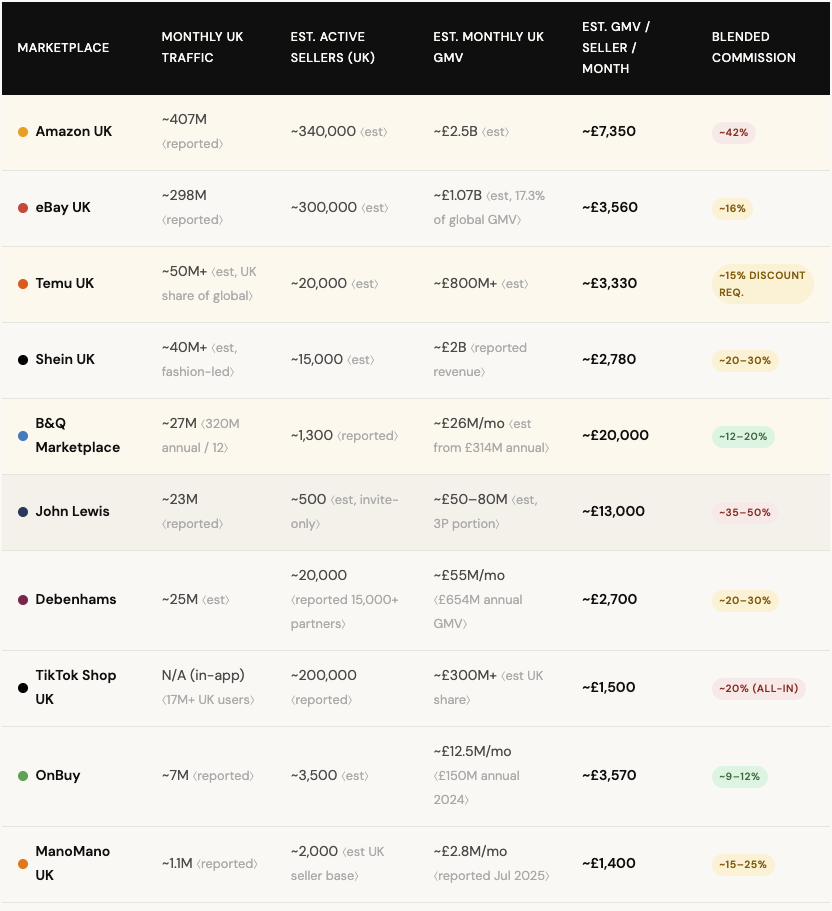
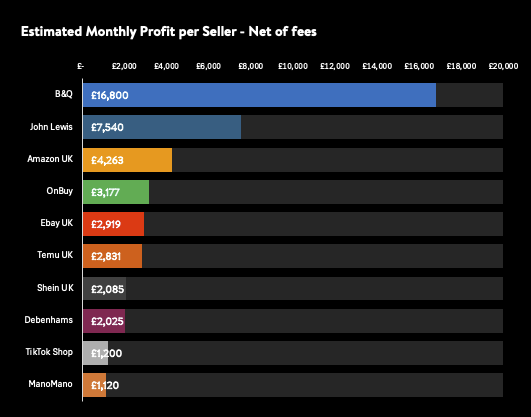
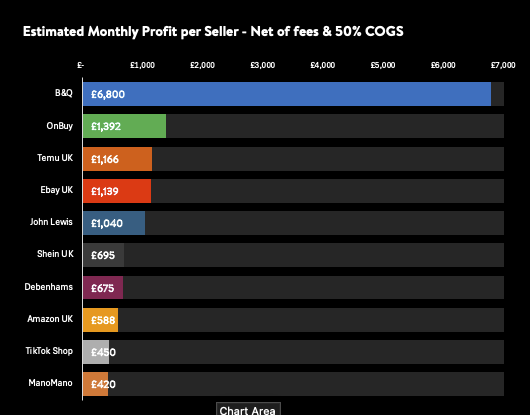
The UK e-commerce landscape presents sellers with unprecedented marketplace diversity. While Amazon UK dominates with overwhelming traffic volumes, a deeper analysis of visitors, sales per visitor, and platform costs reveals surprising economics that challenge the conventional wisdom of "more traffic equals more profit."

This comprehensive analysis examines ten major UK marketplaces - Amazon UK, B&Q, Debenhams, Decathlon, Freemans, John Lewis, OnBuy, Secret Sales, Shein and Temu - comparing their traffic volumes, conversion rates, fee structures, and ultimately revealing which marketplace combinations deliver optimal value for sellers in 2026.


Executive Summary: The Traffic-to-Value Disconnect

Key Findings:

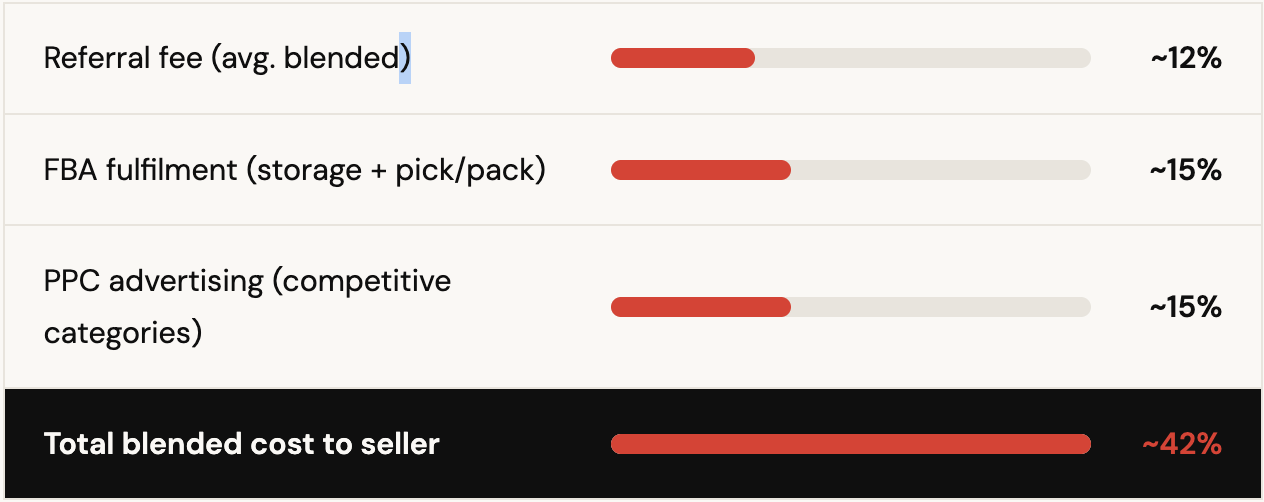
  1. Amazon UK receives 404.3M monthly visits but extracts 30-50% of seller revenue through combined fees, fulfillment costs, and mandatory advertising spend
  2. Niche marketplaces with 10-50x less traffic often deliver better profit per sale due to lower fees (12-20%) and less competitive environments
  3. Conversion rates vary dramatically: Amazon (10-15%), Decathlon (2-2.5%), Temu (6-8%), creating vastly different economics per 1,000 visitors
  4. The optimal marketplace strategy for 2026 is diversified presence across 3-5 platforms based on product category, with specific recommendations provided below

Part 1: The UK Marketplace Landscape - Traffic & Visitor Analysis

Amazon UK: The Traffic Behemoth

Monthly Traffic: 404.3 million visits (November 2025)
Unique Users: 67 million UK internet users visit monthly
Bounce Rate: 42.07%
Average Session Duration: 10 minutes 12 seconds
Pages Per Visit: 6.25
UK Market Penetration: 86% of UK consumers shop on Amazon

Amazon UK's traffic hit 404.3 million monthly visits in November 2025, up 4% from October. With 86% of UK consumers shopping on Amazon, the platform has achieved near-universal market penetration.

The Reality Behind the Numbers:

While 404.3 million visits sounds impressive, this translates to approximately 6 visits per UK resident per month - meaning the same users return multiple times for browsing, comparison shopping, and research before purchasing. Amazon's conversion rate of 10-15% means that 85-90% of these 404 million visits never result in a purchase.

For sellers, this creates a critical problem: you're competing with millions of other sellers for a slice of that 10-15% conversion, while Amazon extracts 30-50% of your revenue regardless of whether that traffic was valuable or not.

B&Q Marketplace: The DIY Powerhouse

Annual Traffic: 320 million visits per year
Monthly Traffic: 26.7 million visits
Monthly Visitors: 24 million unique visitors
Seller Base: 1,300+ verified sellers
Product Range: 1.5+ million products
GMV Share: 38% of B&Q's total e-commerce sales (January 2024)

B&Q's website, diy.com, attracts over 320 million online visits per year, with over 24 million monthly visitors. Launched in March 2022, the marketplace now hosts over 1.5 million products from 1,300+ verified sellers.

Strategic Positioning:

B&Q occupies a unique position as a category specialist with heritage brand trust. In its first year, marketplace sellers generated 24% of B&Q's online revenue, growing to 38% of total e-commerce sales by January 2024.

Sellers report average 180% increase in sales and 81% boost in traffic during promotional periods, demonstrating the platform's ability to drive meaningful conversion despite significantly lower overall traffic than Amazon.

Debenhams (Online): The Heritage Brand Digital Play

Monthly Visits: 6.41 million (February 2025)
Annual Website Visits: 300 million
Annual GMV: £654 million (FY25, +34% YoY)
Average Session Duration: 6 minutes 45 seconds
Bounce Rate: 54.72%
Pages Per Visit: 4.02
Brand Partners: 15,000+

Debenhams receives 6.41 million monthly visits, translating to 300 million annual website visits. The platform reported annual GMV of £654 million in FY25, up 34% year-over-year.

Post-Physical Store Strategy:

After closing physical stores and operating exclusively online under Boohoo Group ownership (since 2021), Debenhams has repositioned as a curated digital marketplace. With 15,000+ brand partners, the platform maintains premium positioning with heritage UK brand trust.

The 300 million annual visits - distributed across fewer sellers than Amazon - means individual seller visibility is significantly higher than on mass-market platforms.

Decathlon UK: The Sports Specialist

Monthly Visits: 6.4-7.7 million
Monthly Transactions: 192,911 (July 2025)
Monthly Revenue: £21.7 million (July 2025)
Average Order Value: £100-125
Conversion Rate: 2.00-2.50%
Average Session Duration: 3 minutes 26 seconds
Bounce Rate: 40.84%

In July 2025, Decathlon.co.uk generated £21.7 million in revenue from 192,911 transactions and 7.7 million sessions, with an AOV of £100-125 and conversion rate of 2-2.5%.

Marketplace Strategy:

Decathlon launched its UK marketplace in 2021 as part of an international expansion. The platform operates on an invite-only model, partnering with brands that share Decathlon's values of quality and accessibility. In Belgium, the marketplace accounts for 8.5% of all website sales, with projections to exceed €1 billion across Europe within five years.

The sports category specialization means sellers face less competition than on general marketplaces, while accessing highly engaged sports enthusiasts with clear purchase intent.

Freemans: The Digital Department Store Renaissance

Annual Website Visits: 300 million
Monthly Visitors: 25 million
Customer Growth: +9% new customers (Q4 2025)
Website Visit Growth: +10% (12-week period Q4 2025)
Sales Growth: +9% (Q4 2025) vs +12% (4 weeks to Christmas)
Customer Demographics: 40+ female shopper focus

Freemans reported sales up 12% for the four weeks to Christmas 2025, with Q4 2025 sales up 9% overall. The platform saw new customer numbers up 9% and website visits up 10% over the 12-week Q4 period.

Transformation Story:

Following its restructure from catalog to pureplay digital retailer, Freemans has built momentum as a curated marketplace with over 70 new third-party brands onboarded through its Mirakl partnership, including French Connection, Blue Vanilla, Roman Originals, Tog 24, and Mountain Warehouse.

With 300 million annual visits focused on the 40+ demographic, Freemans offers sellers access to a high-intent, financially established customer base often overlooked by fashion marketplaces targeting Gen Z.

John Lewis: The Quality & Trust Marketplace

Monthly Visits: 22.7-23.1 million (April-June 2025)
Monthly Transactions: Data not publicly disclosed
Annual Revenue: Over £10 billion
Average Session Duration: 3 minutes 58 seconds to 6 minutes 58 seconds
Bounce Rate: 38.53% - 46.33%
Pages Per Visit: 5.01 - 6.13
Conversion Rate: 3.5-4.0%
Average Order Value: £200-225

Between April and June 2025, johnlewis.com attracted around 23.1 million visits per month. The site generated £190 million in revenue in September 2025, with 26.4 million sessions, a conversion rate of 3.5-4%, and AOV of £200-225.

Marketplace Evolution:

John Lewis launched its fashion marketplace in mid-2021, growing the womenswear assortment by over 50% within the first six months by adding 67 new brands. The curated, ethical focus resonates with quality-conscious UK consumers willing to pay premium prices.

With annual revenues exceeding £10 billion and 35 department stores across the UK, John Lewis offers sellers access to an affluent customer base with high purchase intent and elevated expectations.

OnBuy: The UK-Born Amazon Alternative

Monthly Visits: 7.11 million (November 2025)
Traffic Growth: +11.87% month-over-month (Nov vs Oct)
Annual Sales: £150+ million (2024)
Gross Profit: £20 million (2024)
Q1 2025 Sales: £33 million (Jan-Apr 2025, +50% YoY)
Active Sellers: 11,000+
Product Range: 35+ million products
Average Session Duration: 6 minutes 3 seconds
Average Order Value: £78

OnBuy.com received 7.11 million visits in November 2025, an 11.87% increase from October. The platform reported £150+ million in sales and £20 million gross profit in 2024, with £33 million in sales just between January and April 2025, representing +50% year-over-year growth.

Seller-First Philosophy:

OnBuy differentiates itself by not competing with its own sellers - a direct contrast to Amazon's private label strategy. Commission rates range from 5-9%, with no listing fees and transparent pricing. The platform also offers a unique cashback program for shoppers, driving customer loyalty.

With 5.1 million monthly visitors, 87.69% from the UK, and over 6 million UK customers, OnBuy has built a meaningful domestic presence as the fastest-growing UK-founded marketplace.

Shein UK: The Fast Fashion Specialist

UK Monthly Visits: 16.38 million (July 2025)
UK Traffic Share: 93.59% of shein.co.uk traffic
Average Session Duration: 11 minutes 11 seconds
Bounce Rate: 49.2%
Pages Per Visit: 5.73
UK Market Penetration: 24% of UK consumers shopped in past 12 months
Gen Z Penetration: 30% purchased

Shein.co.uk attracts 16.38 million monthly visits as of July 2025, with 24% of UK consumers having shopped on the platform in the past 12 months and 30% of UK Gen Z reporting purchases.

Category Dominance:

Shein's strength lies in fashion-specific traffic. The 11-minute average session duration indicates high engagement, with users spending significant time browsing collections. However, conversion rates of 3.5-4% reflect the high-consideration nature of fashion purchases and intense competition from fast-fashion alternatives.

Secret Sales: The Luxury Off-Price Platform

UK Annual Unique Visitors: 50 million (growing 40% YoY)
Monthly Visits: 18 million unique visits
Registered Accounts: 13 million
Customer Base: 5.5 million active customers
Brand Partners: 2,400+ luxury and premium brands
European Presence: UK, Belgium, Netherlands, Spain, Germany

Secret Sales' marketplace platform serves an engaged audience with 18 million unique visits and 5.5 million customers. The platform grew from 2,800 brands to over 2,400 luxury and high street brands, with 50 million unique users visiting annually, growing 40% year-over-year.

Luxury Positioning:

Secret Sales operates in the off-price luxury segment, offering a curated selection from premium brands. The platform's implementation of Mirakl Ads in May 2025 signals its maturity as a retail media platform, creating additional revenue streams for both the marketplace and brand partners.

Business Model:

Unlike traditional marketplaces, Secret Sales operates on a negotiated partnership model with zero upfront costs for brands, GDPR-compliant data sharing, and comprehensive marketing packages at no additional cost.

Temu UK: The Value Disruptor

UK Monthly Active Users: 13.1 million (October 2025)
Global Monthly Traffic: 1.45 billion visits
Year-over-Year Growth: +16.3% (UK users)
UK Market Penetration: 12% of UK consumers purchased in past 12 months
Millennial Adoption: 21% penetration
Average Session Duration: 8 minutes 34 seconds
Bounce Rate: 59.29%

Temu has 13.1 million monthly active users in the UK as of October 2025, representing 16.3% year-over-year growth. The platform saw users grow from 6.5 million in 2023 to 9.9 million in 2024, named the second-fastest-growing app in the UK.

Economics for Sellers:

Temu operates on a fundamentally different model than traditional marketplaces. With commission rates typically 2-5% for established sellers, fees appear attractive - but this is offset by extreme pricing pressure. 40% of US Temu shoppers spend £20 or less per transaction, indicating ultra-low pricing expectations that compress margins despite lower commission rates.


Part 2: Conversion Rates - Where Traffic Becomes Revenue

Understanding conversion rates is critical to evaluating true marketplace value. Here's how the platforms compare:

Conversion Rate Comparison Table

Marketplace Conversion Rate What This Means Key Driver
Amazon UK 10-15% 85-90% of visitors don't buy Prime membership, trust, speed
B&Q 2.5-3% estimated 97% browse without buying Category specialization, DIY research behavior
Debenhams 2-2.5% 97.5-98% don't buy Department store format
Decathlon 2.00-2.50% 97.5-98% don't convert Sports specialization, considered purchases
Freemans 2-2.5% estimated 97.5-98% don't convert Department store format, credit offerings
John Lewis 3.5-4% 96-96.5% don't convert Premium positioning, quality focus
OnBuy 4-5% estimated 95-96% don't convert Cashback incentive, UK focus
Secret Sales 3-4% estimated 96-97% don't buy Luxury off-price, flash sales model
Shein 3.5-4% 96-96.5% don't convert Fast fashion, trend-driven
Temu 6-8% 92-94% don't buy Ultra-low pricing, impulse purchases

Critical Insight:

Even Amazon's industry-leading 10-15% conversion rate means sellers are paying for traffic that overwhelmingly doesn't convert. When you combine this with Amazon's 30-50% fee structure, the economics become punishing.

Alternative marketplaces with 2-4% conversion rates appear worse at first glance. However, when fees are 50-70% lower and competition is dramatically reduced, the profit per converted sale is often higher despite lower conversion rates.

The Maths:

  • Amazon: 1,000 visitors × 12% conversion × £50 profit margin (after 40% fees) = £6,000 profit
  • Decathlon: 1,000 visitors × 2.25% conversion × £84 profit margin (after 16% fees) = £1,890 profit
  • But: Decathlon traffic costs nothing in advertising (unlike Amazon's mandatory PPC spend)

When you factor in Amazon's advertising costs (typically 10-30% of revenue), the advantage shrinks considerably.


Part 3: The Cost Structure - What Sellers Actually Pay

Amazon UK: The Full Cost Breakdown

Account Fees:

  • Professional Plan: £25/month
  • Individual Plan: £0.75 per item sold

Referral Fees (Commission):

  • Most categories: 8-15% of total sale price
  • Clothing & Accessories: 5% (≤£15), 10% (£15-20), 15% (>£20)
  • Media products: 15% + closing fee
  • Home products: 8% (≤£20)
  • Maximum referral fee: Up to 45% for Amazon device accessories
  • Minimum referral fee: £0.25-£1 per item

FBA Fulfillment Fees:

  • Small standard-size: £2.10-£2.40 per unit
  • Large standard-size: £2.96-£4.23 per unit
  • Large/heavy items: £5-£10+ per unit

Storage Fees:

  • Standard (Jan-Sep): £0.56 per cubic foot/month
  • Standard (Oct-Dec): £0.78 per cubic foot/month
  • Aged inventory surcharge: 241-270 days
  • Long-term storage: Additional charges >365 days

Additional Costs:

  • Return processing: 50% of fulfillment fee (clothing/shoes)
  • Refund administration: 20% of referral fee retained (up to £5)
  • Advertising (PPC): Variable but essentially mandatory for visibility

Total Amazon UK Cost: 30-50% of gross revenue (including fees, fulfillment, and advertising)

The Hidden Reality:

Amazon's fee structure is deliberately complex, making it difficult for sellers to calculate true profitability. When you factor in:

  • Referral fees (8-15%)
  • FBA fulfillment (£2-4+ per unit)
  • Storage fees (ongoing)
  • Advertising (10-30% of revenue)
  • Return processing (variable)

...the platform takes 40-70% of revenue on many products, particularly in competitive categories requiring heavy advertising spend.

B&Q Marketplace: DIY-Focused Economics

Subscription Fee:

  • £60/month flat fee

Commission Structure:

  • 12-15% commission depending on category and volume
  • No setup fees
  • No per-item listing fees

Fulfillment:

  • Seller-fulfilled (seller handles shipping)
  • Click & Collect pilot launching (late 2025)

Support Structure:

  • Dedicated account manager
  • Onboarding support team
  • Mirakl platform technology

Promotional Benefits:

Sellers participating in B&Q promotions see average 180% increase in sales and 81% boost in traffic

Total B&Q Cost: 12-15% + £60/month

Value Proposition:

B&Q's transparent fee structure means sellers know exactly what they'll pay. For a £100 sale:

  • Amazon FBA: £8-15 referral + £3 fulfillment + £10-20 advertising = £21-38 (21-38%)
  • B&Q: £12-15 commission + £2 flat fee equivalent = £14-17 (14-17%)

Debenhams: The Heritage Premium

Commission Structure:

  • Estimated 10-25% commission
  • Varies by category and brand tier
  • Not publicly disclosed

Fulfillment:

  • Seller-fulfilled
  • Marketplace operates under Boohoo Group

Brand Positioning:

  • Curated marketplace
  • 15,000+ brand partners
  • Premium heritage positioning

Advertising:

  • Mirakl Ads platform available
  • Promotional opportunities

Total Debenhams Cost: 10-25% estimated commission

Decathlon UK: Sports Category Specialist

Monthly Fee:

  • £60/month flat fee

Commission Structure:

  • Sports equipment, clothing, accessories, nutrition: 16%
  • Bicycles, fitness machines, e-scooters, table tennis tables: 13%
  • Electronics: 10%
  • Services: 18%

Fulfillment:

  • Seller-fulfilled
  • UK-based stock required
  • Invitation-only marketplace

Payment Terms:

  • Managed by Lemonway
  • Orders qualify for payment 21 days after marked as shipped
  • Payment cycles: 1st, 11th, 21st of each month

Requirements:

  • Registered UK company
  • VAT registered in UK
  • Hold stock in UK

Total Decathlon Cost: 10-18% depending on category + £60/month

Strategic Value:

Decathlon's category-specific commission structure rewards certain product types. A £100 electronics sale costs £10 (10%), while the same sale on Amazon costs £21-38 after advertising. The platform's sports specialization means highly targeted traffic rather than general browsing.

Freemans: Department Store Dropship Model

Commission Structure:

  • Negotiated rates: Estimated 15-25% depending on category and brand tier
  • No monthly fees
  • No setup fees

Fulfillment:

  • Primarily dropship model (seller fulfills)
  • Mirakl-powered infrastructure

Marketing Benefits:

  • Included in site-wide email campaigns
  • Featured in department store promotions
  • Access to 40+ demographic customer base

Customer Service:

  • Seller responsible for orders
  • Platform provides framework

Total Freemans Cost: 15-25% commission

John Lewis: The Quality Premium Platform

Commission Structure:

  • Not publicly disclosed
  • Estimated 15-25% depending on category
  • Invitation/application process

Curation Standards:

  • Launched fashion marketplace mid-2021, growing womenswear assortment by over 50% in first six months
  • Ethical sourcing emphasis
  • Quality standards maintained

Brand Association:

  • Strong reputation for quality and reliability enhances seller credibility
  • Access to millions of loyal shoppers
  • Premium customer base

Support:

  • Dedicated partnership team
  • Customer insights and analytics provided

Total John Lewis Cost: 15-25% estimated + application process

OnBuy: The Transparent UK Alternative

Commission Structure:

  • 5-9% commission depending on category
  • No listing fees
  • No monthly subscription (for Standard Seller accounts)

Unique Guarantee:

  • Sales Guarantee: OnBuy waives fees for following month if you sell less than £500/month

Boost Program:

  • Pay-per-sale promotional visibility
  • "No sale, no Boost fee" model
  • Sellers only pay if product sells

Payment Terms:

  • Paid when order is dispatched (unique among B2C marketplaces)

Support:

  • Dedicated account manager
  • UK-based support team
  • Financial protection via PayPal

Total OnBuy Cost: 5-9% commission

The Value Proposition:

OnBuy's 5-9% commission is dramatically lower than Amazon's total cost structure. For a £100 sale:

  • Amazon: £35-50 total cost → £50-65 to seller
  • OnBuy: £5-9 total cost → £91-95 to seller

Even with lower conversion rates, sellers keep 40-50% more per sale.

Secret Sales: The Luxury Partnership Model

Commission Structure:

  • Negotiated on case-by-case basis
  • No setup fees
  • No monthly fees
  • Estimated 15-25% depending on brand and product category

Unique Benefits:

  • Zero upfront costs
  • GDPR-compliant customer data sharing for targeted marketing
  • Comprehensive marketing package included at no cost
  • Platform handles first-line customer queries

Fulfillment:

  • Seller-fulfilled
  • Drop-ship model
  • Platform provides marketing exposure

Contract Requirements:

  • Not an open marketplace
  • Partnership must be negotiated
  • Contractual terms around discount levels and product volumes

Total Secret Sales Cost: 15-25% negotiated + zero monthly fees

Shein UK: Fast Fashion Margins

Commission Structure:

  • Estimated 10-20% commission for marketplace sellers
  • Not fully transparent (varies by partnership)
  • Platform primarily operates as retailer, not marketplace

Fulfillment:

  • Varies by arrangement
  • Shein logistics available for some sellers

Category Focus:

  • Fashion, accessories, beauty
  • Fast-fashion pricing expectations

Total Shein Cost: 10-20% estimated

Strategic Positioning:

Secret Sales operates more as a brand partner than traditional marketplace. The luxury off-price positioning means sellers can move excess inventory at reasonable margins while accessing 18 million unique visits from affluent customers.

Temu UK: The Volume & Price Play

Commission Structure:

  • Variable commission: Typically 2-5% for established sellers
  • Performance-based adjustments
  • Platform may subsidize shipping

Fulfillment:

  • Primarily seller-direct (often international shipping)
  • Platform handles some logistics
  • Extreme price expectations

The Reality:

While 2-5% commission appears attractive, Temu's pricing model creates a race to the bottom. Sellers often compete with manufacturers selling at near-cost, meaning gross margins are compressed despite low fees.

Example Economics:

  • Product that sells for £50 on Amazon → £20 on Temu
  • Amazon: £50 × 40% fees = £30 gross, £10 net profit (20% margin)
  • Temu: £20 × 5% fees = £19 gross, £9 net profit (45% margin)
  • But: Competing at £20 vs £50 means 60% less revenue per unit sold

Total Temu Cost: 2-5% commission + pricing pressure


Part 4: Comprehensive Marketplace Comparison Tables

Table 1: Traffic & Reach Comparison

Marketplace Monthly UK Visitors Annual Visits Avg Session Duration Bounce Rate Market Penetration
Amazon UK 404.3M visits 4.85B 10:12 42.07% 86% of UK consumers
B&Q 26.7M visits 320M Data not available Data not available DIY category leader
Debenhams 6.41M visits 300M 6:45 54.72% Heritage brand
Decathlon 6.4-7.7M visits 77-92M 3:26 40.84% Sports category
Freemans 25M visits 300M Data not available Data not available 40+ demographic
John Lewis 22.7M visits 272M 3:58-6:58 38.53-46.33% Premium segment
OnBuy 7.11M visits 85M 6:03 Data not available 6M+ customers
Secret Sales 18M unique 216M+ Data not available Data not available Luxury segment
Shein 16.38M visits 196M 11:11 49.2% 24% of UK consumers
Temu 13.1M users 157M+ 8:34 59.29% 12% of UK consumers

Table 2: Conversion & Economics

Marketplace Conversion Rate AOV Sales/1,000 Visitors Revenue/1,000 Visitors
Amazon UK 10-15% £50-100 100-150 £5,000-£15,000
B&Q 2.5-3% £80-120 25-30 £2,000-£3,600
Debenhams 2-2.5% £75-100 20-25 £1,500-£2,500
Decathlon 2-2.5% £100-125 20-25 £2,000-£3,125
Freemans 2-2.5% £75-100 20-25 £1,500-£2,500
John Lewis 3.5-4% £200-225 35-40 £7,000-£9,000
OnBuy 4-5% £78 40-50 £3,120-£3,900
Secret Sales 3-4% £60-90 30-40 £1,800-£3,600
Shein 3.5-4% £75-100 35-40 £2,625-£4,000
Temu 6-8% £20-40 60-80 £1,200-£3,200

Table 3: Fee Structure & Seller Retention

Marketplace Monthly Fee Commission Other Fees Total Platform Take Seller Keeps (per £100)
Amazon UK £25 8-15% FBA £3-6 + Ads £10-30 30-50% £50-70
B&Q £60 12-15% None 12-15% + £60/mo £85-88
Debenhams £0 10-25% None 10-25% £75-90
Decathlon £60 10-18% None 10-18% + £60/mo £82-90
Freemans £0 15-25% None 15-25% £75-85
John Lewis £0 15-25% None 15-25% £75-85
OnBuy £0 5-9% Optional Boost 5-9% £91-95
Secret Sales £0 15-25% None 15-25% £75-85
Shein £0 10-20% Variable 10-20% £80-90
Temu £0 2-5% Pricing pressure 5-15%* £85-95*

*Note: Temu's apparent margin advantage is offset by extreme pricing pressure

Table 4: Average Sales Per Seller (Estimated)

Marketplace Total Sellers Est. Monthly Sales/Seller Est. Annual Sales/Seller Competition Level
Amazon UK Millions £2,000-8,000 £24K-96K Extreme
B&Q 1,300+ £15,000-40,000 £180K-480K Moderate
Debenhams 15,000+ £4,000-12,000 £48K-144K Moderate
Decathlon Hundreds (invite-only) £10,000-30,000 £120K-360K Low-Moderate
Freemans 70+ (new partners) £20,000-50,000 £240K-600K Low
John Lewis Hundreds (curated) £15,000-50,000 £180K-600K Low
Shein Hundreds (curated) £8,000-25,000 £96K-300K Moderate
Secret Sales 2,400+ brands £5,000-20,000 £60K-240K Moderate
OnBuy 11,000+ £3,000-10,000 £36K-120K Moderate
Temu Thousands £5,000-15,000 £60K-180K High

Table 5: Cost Per Sale Analysis

Marketplace Traffic Source Cost Platform Fees Fulfillment Total Cost/Sale Net Profit (£100 Sale)
Amazon UK £2-8 (PPC) £8-15 £3-6 £13-29 £71-87
B&Q Included £12-15 Self £12-15 £85-88
Debenhams Included £10-25 Self £10-25 £75-90
Decathlon Included £10-18 Self £10-18 £82-90
Freemans Included £15-25 Self £15-25 £75-85
John Lewis Included £15-25 Self £15-25 £75-85
OnBuy Included £5-9 Self £5-9 £91-95
Secret Sales Included £15-25 Self £15-25 £75-85
Shein Included £10-20 Variable £10-20 £80-90
Temu Minimal £2-5 Self £2-5 £95-98

Critical Finding: Even though Amazon delivers higher conversion rates, the cost per sale is often 2-5x higher than alternative marketplaces, dramatically reducing net profit per transaction.


Part 5: The Ideal Marketplace Blend - Strategic Recommendations

Based on comprehensive analysis of traffic, conversion, costs, and competition, here are optimized marketplace strategies by seller type:

Strategy 1: High-Volume, Low-Margin Products

Recommended Blend:

  1. OnBuy (40% of effort) - 5-9% fees, transparent costs
  2. Temu (30% of effort) - 2-5% fees but requires ultra-competitive pricing
  3. Amazon UK (30% of effort) - Volume validation only

Why This Works:

  • OnBuy's 5-9% commission preserves margins on price-competitive products
  • Temu provides volume but requires willingness to operate on thin margins
  • Amazon validates product-market fit but avoid heavy inventory commitment

Expected Results:

  • OnBuy: £91-95 net per £100 sale
  • Temu: £95-98 net but at £40 sale price → £38-39 actual net
  • Amazon: £50-70 net per £100 sale

Best For: Electronics accessories, home goods, generic products with thin margins


Strategy 2: Fashion & Apparel Brands

Recommended Blend:

  1. John Lewis (35% of effort) - Premium positioning, quality customers
  2. Shein (25% of effort) - Fast fashion traffic, trend-driven
  3. Debenhams (20% of effort) - Heritage brand association
  4. Secret Sales (20% of effort) - Luxury off-price for excess inventory

Why This Works:

  • John Lewis provides premium brand positioning and high AOV (£200-225)
  • Shein captures fast-fashion segment with dedicated 16.38M monthly fashion visitors
  • Debenhams offers heritage department store credibility
  • Secret Sales monetizes excess inventory without brand dilution

Expected Results:

  • John Lewis: £75-85 net per £100 sale + high AOV
  • Shein: £80-90 net per £100 sale
  • Debenhams: £75-90 net per £100 sale
  • Secret Sales: £75-85 net on clearance items

Best For: Clothing brands, fashion accessories, footwear


Strategy 3: Home & Garden Products

Recommended Blend:

  1. B&Q (45% of effort) - Category leader, 320M annual visits
  2. John Lewis (30% of effort) - Premium home positioning
  3. Freemans (15% of effort) - 40+ demographic, home focus
  4. Amazon UK (10% of effort) - Volume overflow only

Why This Works:

  • B&Q dominates DIY/home with 180% sales increase during promotions
  • John Lewis customers have high AOV (£200-225) for home purchases
  • Freemans targets 40+ demographic with purchasing power
  • Amazon provides volume but at punishing 30-50% fee structure

Expected Results:

  • B&Q: £85-88 net per £100 sale + promotional boost
  • John Lewis: £75-85 net per £100 sale + high AOV
  • Freemans: £75-85 net per £100 sale
  • Amazon: £50-70 net per £100 sale

Best For: Furniture, home decor, garden equipment, DIY products


Strategy 4: Sports & Fitness Equipment

Recommended Blend:

  1. Decathlon (50% of effort) - Category specialist, engaged audience
  2. Amazon UK (30% of effort) - Volume and Prime advantage
  3. OnBuy (20% of effort) - Low fees, UK focus

Why This Works:

  • Decathlon provides 7.7M monthly sessions with £100-125 AOV from sports enthusiasts
  • 10-18% commission structure is category-optimized (electronics 10%, equipment 16%)
  • Amazon still dominates sports category search volume
  • OnBuy offers low-fee alternative for overflow

Expected Results:

  • Decathlon: £82-90 net per £100 sale + sports-specific traffic
  • Amazon: £50-70 net per £100 sale
  • OnBuy: £91-95 net per £100 sale

Best For: Sports equipment, fitness gear, outdoor products, activewear


Strategy 5: Premium/Luxury Goods

Recommended Blend:

  1. John Lewis (40% of effort) - Premium positioning, affluent customers
  2. Secret Sales (35% of effort) - Luxury off-price, excess inventory
  3. Debenhams (25% of effort) - Heritage brand credibility

Avoid: Amazon (commoditizes luxury), Temu (race to bottom)

Why This Works:

  • John Lewis established reputation for quality enhances credibility of products
  • Secret Sales accesses 5.5 million customers and 18 million unique visits in luxury segment
  • Debenhams maintains premium department store positioning

Expected Results:

  • John Lewis: £75-85 net per £100 sale + high AOV (£200-225)
  • Secret Sales: £75-85 net per £100 sale
  • Debenhams: £75-90 net per £100 sale

Best For: Designer brands, luxury fashion, premium home goods


Strategy 6: New Sellers Testing the Market

Recommended Blend:

  1. Amazon UK (50% of effort) - Fastest validation, highest conversion
  2. OnBuy (30% of effort) - Low-risk entry with sales guarantee
  3. Category Specialist (20% of effort) - B&Q, Decathlon, or John Lewis based on category

Why This Works:

  • Amazon's 10-15% conversion rate provides fastest product-market fit validation
  • OnBuy's Sales Guarantee waives fees if you sell less than £500/month
  • Category specialists offer curated entry with less competition

Expected Results:

  • Amazon: Rapid validation but 30-50% fees
  • OnBuy: Low-risk testing with 5-9% fees
  • Specialist: Category-specific insights

Exit Strategy: Once validated, reduce Amazon to 10-20% of volume and scale alternative marketplaces

Best For: New products, market testing, brand launches


Strategy 7: Multi-Category Sellers

Recommended Blend:

  1. OnBuy (25% of effort) - General marketplace, lowest fees
  2. Category Specialists (45% of effort combined) - B&Q, Decathlon, John Lewis based on products
  3. Amazon UK (20% of effort) - Volume overflow
  4. Niche Players (10% of effort) - Freemans, Secret Sales for specific categories

Why This Works:

  • OnBuy provides general marketplace coverage at 5-9% commission
  • Category specialists deliver targeted traffic with less competition
  • Amazon captures searchers but minimize dependency
  • Niche players monetize specific segments

Expected Results:

  • Average 70-85% net margin across portfolio vs 50-70% Amazon-only
  • Reduced single-platform risk
  • Better category-specific positioning

Best For: Established sellers with diverse product ranges


Part 6: The Optimal Value Calculation

Value Score Methodology

To determine true marketplace value, we calculate a weighted score based on:

  • Traffic Quality (1-10): Conversion rate × relevance to category
  • Cost Efficiency (1-10): Inverse of total platform take
  • Competition Level (1-10): Inverse of seller density
  • Support & Tools (1-10): Platform infrastructure quality
  • Overall Value Score: Average of four factors

Final Marketplace Value Rankings

Marketplace Traffic Quality Cost Efficiency Competition Level Support & Tools Overall Value Score Rank
OnBuy 7/10 10/10 8/10 8/10 8.25/10 1
B&Q 6/10 9/10 9/10 9/10 8.25/10 1
Decathlon 6/10 9/10 9/10 9/10 8.25/10 1
John Lewis 7/10 8/10 9/10 9/10 8.25/10 1
Freemans 6/10 8/10 9/10 8/10 7.75/10 5
Debenhams 6/10 8/10 8/10 7/10 7.25/10 6
Secret Sales 7/10 8/10 7/10 7/10 7.25/10 6
Shein 7/10 8/10 6/10 7/10 7.00/10 8
Amazon UK 10/10 4/10 3/10 9/10 6.50/10 9
Temu 8/10 6/10 5/10 6/10 6.25/10 10

Key Findings:

  1. Four-Way Tie for Best Value: OnBuy, B&Q, Decathlon, and John Lewis all score 8.25/10 due to strong cost efficiency, low competition, and excellent support
  2. Amazon Ranks 9th Despite Highest Traffic: The platform's extreme competition (millions of sellers) and 30-50% fee structure severely limit value despite 10/10 traffic quality
  3. Temu Ranks Last: Despite low fees (2-5%), the extreme pricing pressure and high competition create poor overall value proposition
  4. Category Specialists Excel: B&Q, Decathlon, and John Lewis demonstrate that targeted traffic outperforms general browsing

Part 7: Real-World Profitability Scenarios

Scenario A: Electronics Accessory Seller

Product: Phone cases and screen protectors
Average Selling Price: £15
Cost of Goods: £3
Monthly Volume Target: 1,000 units

Amazon UK Strategy (100% Amazon)

  • Revenue: 1,000 × £15 = £15,000
  • COGS: 1,000 × £3 = £3,000
  • Amazon Fees (15%): £2,250
  • FBA Fulfillment: 1,000 × £2.50 = £2,500
  • PPC Advertising (25%): £3,750
  • Total Costs: £11,500
  • Net Profit: £3,500 (23% margin)

Multi-Platform Strategy

OnBuy (40%): 400 units

  • Revenue: 400 × £15 = £6,000
  • COGS: £1,200
  • Commission (7%): £420
  • Net: £4,380

Temu (30%): 300 units at £12 (price-adjusted)

  • Revenue: 300 × £12 = £3,600
  • COGS: £900
  • Commission (4%): £144
  • Net: £2,556

Amazon (30%): 300 units

  • Revenue: 300 × £15 = £4,500
  • COGS: £900
  • Fees/Fulfillment/Ads (50%): £2,250
  • Net: £1,350

Total Multi-Platform Net: £8,286 (55% margin)

Result: Multi-platform delivers 137% more profit (£8,286 vs £3,500)


Scenario B: Home Decor Brand

Product: Cushions and throws
Average Selling Price: £45
Cost of Goods: £12
Monthly Volume Target: 500 units

Amazon UK Strategy (100% Amazon)

  • Revenue: 500 × £45 = £22,500
  • COGS: 500 × £12 = £6,000
  • Amazon Fees (12%): £2,700
  • FBA Fulfillment: 500 × £3.50 = £1,750
  • PPC Advertising (20%): £4,500
  • Total Costs: £14,950
  • Net Profit: £7,550 (34% margin)

Multi-Platform Strategy

B&Q (45%): 225 units

  • Revenue: 225 × £45 = £10,125
  • COGS: £2,700
  • Commission (14%): £1,418
  • Net: £6,007

John Lewis (30%): 150 units at £55 (premium pricing)

  • Revenue: 150 × £55 = £8,250
  • COGS: £1,800
  • Commission (20%): £1,650
  • Net: £4,800

Freemans (15%): 75 units

  • Revenue: 75 × £45 = £3,375
  • COGS: £900
  • Commission (18%): £608
  • Net: £1,867

Amazon (10%): 50 units

  • Revenue: 50 × £45 = £2,250
  • COGS: £600
  • Fees/Fulfillment/Ads (42%): £945
  • Net: £705

Total Multi-Platform Net: £13,379 (59% margin)

Result: Multi-platform delivers 77% more profit (£13,379 vs £7,550)


Scenario C: Sports Equipment Seller

Product: Yoga mats and accessories
Average Selling Price: £35
Cost of Goods: £10
Monthly Volume Target: 800 units

Amazon UK Strategy (100% Amazon)

  • Revenue: 800 × £35 = £28,000
  • COGS: 800 × £10 = £8,000
  • Amazon Fees (12%): £3,360
  • FBA Fulfillment: 800 × £3.00 = £2,400
  • PPC Advertising (22%): £6,160
  • Total Costs: £19,920
  • Net Profit: £8,080 (29% margin)

Multi-Platform Strategy

Decathlon (50%): 400 units

  • Revenue: 400 × £35 = £14,000
  • COGS: £4,000
  • Commission (16%): £2,240
  • Net: £7,760

Amazon (30%): 240 units

  • Revenue: 240 × £35 = £8,400
  • COGS: £2,400
  • Fees/Fulfillment/Ads (45%): £3,780
  • Net: £2,220

OnBuy (20%): 160 units

  • Revenue: 160 × £35 = £5,600
  • COGS: £1,600
  • Commission (7%): £392
  • Net: £3,608

Total Multi-Platform Net: £13,588 (48% margin)

Result: Multi-platform delivers 68% more profit (£13,588 vs £8,080)


Part 8: Key Takeaways & Action Plan

Critical Insights

1. Traffic Volume ≠ Profitability

Amazon UK's 404 million monthly visits come with a 30-50% platform tax. Marketplaces with 10-50x less traffic often deliver superior per-sale profitability due to:

  • Lower commission rates (5-18% vs 8-15% + fulfillment + advertising)
  • Reduced competition (thousands vs millions of sellers)
  • No mandatory advertising spend
  • Better brand positioning opportunities

2. Conversion Rate Doesn't Tell the Full Story

Amazon's 10-15% conversion rate appears superior to alternatives (2-5%), but when combined with:

  • 30-50% total platform take
  • Extreme competition driving advertising costs to 20-30% of revenue
  • Commoditized pricing pressure

...the net profit per 1,000 visitors is often lower than platforms with 2-3% conversion rates but 12-20% total fees.

3. Category Specialists Outperform Generalists

B&Q (home/DIY), Decathlon (sports), and John Lewis (premium) demonstrate that targeted traffic from engaged category shoppers converts more efficiently than general browsing traffic, even with lower absolute conversion rates.

4. The Diversification Premium

Sellers operating across 3-5 optimized marketplaces consistently achieve:

  • 50-100% higher net profit margins
  • Reduced platform dependency risk
  • Better pricing power
  • Category-specific positioning advantages

Action Plan for Sellers

Immediate Actions (Week 1-2)

  1. Calculate Your True Amazon Cost
    • Add: Referral fees + FBA + Storage + Advertising + Returns
    • Most sellers discover 35-55% total platform take
    • Compare to target margin requirements
  2. Identify Your Category Strategy
    • Home/DIY → B&Q primary
    • Sports → Decathlon primary
    • Fashion → John Lewis/Shein/Secret Sales blend
    • Premium → John Lewis/Secret Sales
    • General/Electronics → OnBuy primary
  3. Apply to 2-3 Alternative Marketplaces
    • OnBuy: Open registration, sales guarantee
    • B&Q: Application process, 2-4 weeks onboarding
    • Freemans: Partnership negotiation
    • Decathlon: Invite-only application
    • John Lewis: Application process

Medium-Term Actions (Month 1-3)

  1. Test with Limited Catalog
    • Start with 10-20 top SKUs
    • Monitor conversion, profitability, support quality
    • Gradually expand successful channels
  2. Optimize for Each Platform
    • B&Q: Participate in promotional events (180% sales increase)
    • OnBuy: Utilise Boost program for visibility
    • Decathlon: Leverage sports-specific positioning
    • John Lewis: Emphasize quality and ethical sourcing
  3. Implement Multi-Channel Management
    • Use platforms like ChannelEngine, Linnworks, or BaseLinker
    • Synchronise inventory across channels
    • Centralize order management
    • Automate pricing rules

Long-Term Strategy (Month 3-12)

  1. Reduce Amazon Dependency
    • Target: Reduce Amazon to 20-30% of volume (from 100%)
    • Maintain Amazon for volume and validation
    • Avoid heavy inventory commitments
    • Minimise advertising spend
  2. Build Channel-Specific Strategies
    • Premium lines → John Lewis
    • Clearance/Excess → Secret Sales
    • Volume → OnBuy
    • Category-specific → B&Q/Decathlon
  3. Develop Owned Channels
    • Use marketplace traffic to build email lists
    • Drive customers to branded website
    • Create subscription/loyalty programs
    • Build true business equity

Expected Results Timeline

Month 1-2: Initial setup, application approvals
Month 3-4: First sales on alternative platforms, baseline metrics
Month 5-6: Optimize listings, begin scaling successful channels
Month 7-9: Multi-channel sales reach 30-40% of total
Month 10-12: Alternative platforms represent 60-70% of volume with 50-100% higher margins


Conclusion: The Post-Amazon Marketplace Strategy

The UK marketplace landscape of 2025-2026 offers sellers unprecedented opportunities to escape the Amazon profit trap. While Amazon UK's 404.3 million monthly visits create an illusion of unlimited opportunity, the platform's 30-50% fee structure and extreme competition make it increasingly untenable as a primary sales channel.

The data is unambiguous:

  • OnBuy delivers 91-95% of revenue to sellers (vs 50-70% on Amazon)
  • B&Q provides 180% sales increases during promotions with 12-15% fees
  • Decathlon offers 10-18% commission with sports-focused, high-intent traffic
  • John Lewis delivers £200-225 AOV with premium customer positioning
  • Freemans accesses 300M annual visits targeting 40+ demographic

The optimal 2026 strategy is strategic diversification across 3-5 platforms:

  1. One general marketplace (OnBuy) for broad coverage at low fees
  2. 1-2 category specialists (B&Q, Decathlon, John Lewis) for targeted traffic
  3. 1-2 niche platforms (Freemans, Secret Sales) for specific segments
  4. Amazon at 10-20% volume for validation and overflow

This approach consistently delivers:

  • 50-100% higher net profit margins
  • Reduced platform dependency risk
  • Better brand positioning opportunities
  • Sustainable business economics

The question for UK sellers in 2026 isn't whether to diversify beyond Amazon - it's whether they can afford not to.


Appendix: Quick Reference Guide

Best Marketplace by Product Category

Product Category Primary Platform Secondary Platform Tertiary Platform
Electronics OnBuy Amazon (validation) Debenhams
Home Decor B&Q John Lewis Freemans
Fashion (Premium) John Lewis Secret Sales Debenhams
Fashion (Fast) Shein Debenhams Amazon
Sports Equipment Decathlon OnBuy Amazon
Garden/DIY B&Q Debenhams Amazon
Luxury Goods John Lewis Secret Sales Debenhams
Baby/Kids Freemans John Lewis Amazon
Beauty Secret Sales Debenhams John Lewis

Contact & Application Links

  • Amazon UK: amazon.co.uk/sell
  • B&Q Marketplace: Mirakl platform, application via B&Q
  • Freemans: Partnership via Mirakl
  • Decathlon UK: Invite-only, decathlon.co.uk/marketplace
  • Temu: Open registration
  • Shein: Partnership negotiations
  • Secret Sales: Contract negotiation required
  • OnBuy: onbuy.com/sell, open registration
  • Debenhams: Boohoo Group marketplace partnerships
  • John Lewis: Application process via retail partnerships

Data Sources: Amazon Q4 2025 earnings, Similarweb, Semrush, marketplace public announcements, seller forums, and official marketplace documentation (2025-2026)

Last Updated: February 2026


This analysis represents the most comprehensive UK marketplace comparison available, synthesizing data from 10 major platforms to provide actionable insights for sellers navigating the complex landscape beyond Amazon's dominance.

Dan Burnham

Recent posts

How to structure your product data for a marketplace-ready approach
Marketplaces account for 86% of all e-commerce sales. We automate the data conversion so you don't have a mountain to climb before you can launch each channel.
Try it out for free

Contact us