Unlocking the value of supplier feeds
Motorcycle Parts and Accessories
The Brief
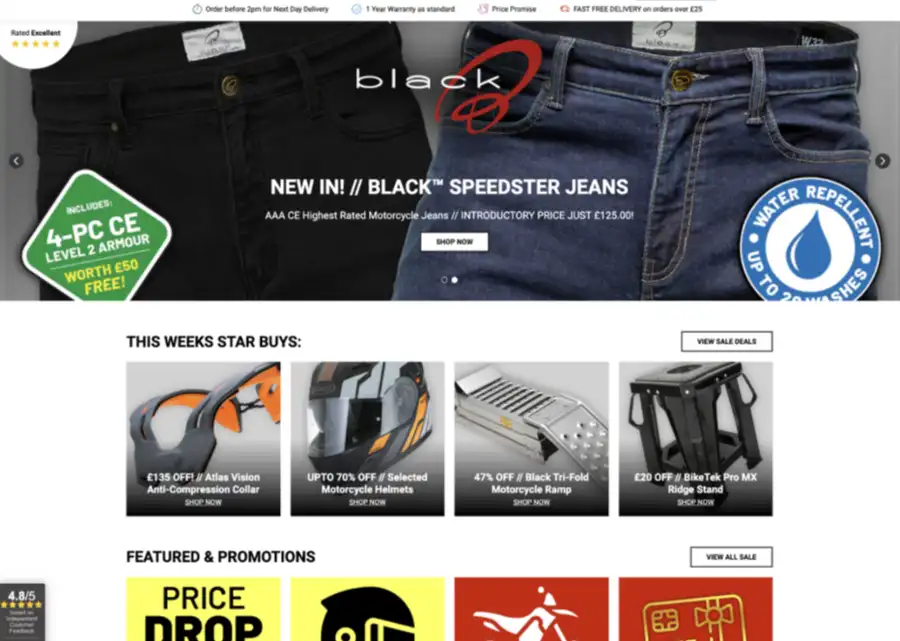
A large seller of motorcycle gear was already a big seller on Ebay offering a mixture of own-brand and third party protective clothing.
- Stock was held in a large purpose-built warehouse and managed by a third party ERP system which also managed their Ebay listings and website.
- They wanted to add the full ranges from around 20 suppliers as dropship items and add them to their website and Ebay listings.
- They also wanted to add other marketplaces including Amazon, Onbuy and Temu.
The Challenge
With these new SKUs numbering in the hundreds of thousands, they needed a way to automate the flow of data from end to end. They also needed a way to automate the listings to Amazon, Onbuy and Temu.
But there were other challenges:
- The seller had around 20 suppliers and each presented their product data in a variety of ways, often spread over multiple files and rarely in the same format.
- They had a number of top sellers on Ebay and wanted to preserve their sales history and ranking.
- They wanted to preserve their existing order flow and stock control systems.
The outcome
- The seller has automated over 100 supplier feeds all of which are automatically mapped to the Listabl taxonomy. Some are picked up from ftp locations, Dropbox and Google drive with many processing in a sequence to merge data from different sources.
- Stock levels and orders are fully synchronised in real-time via API with new and existing orders integrating seamlessly.
- We now have around 300,000 products in the Listabl taxonomy with new ones being added and finished ones removed automatically.
- In addition to Ebay and their website, we now have listings up on Amazon, Onbuy & Temu.
In 12 months, the business has added £1.5 million to its annual turnover and managed to reduce headcount.
Adapting variations for each channel
Sportswear brand
THE Brief
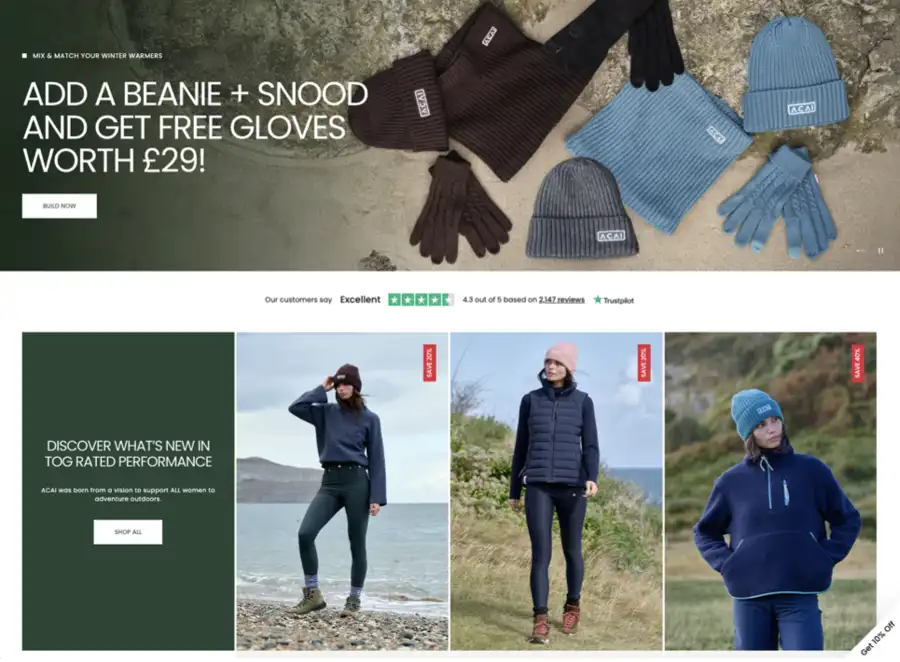
A clothing brand wanted to add marketplaces to their D2C operations by adding Marketplaces to their only existing e-commerce channel - their website.
- The website is built on Shopify.
- Target sales channels: Debenhams and John Lewis.
- Orders to be pushed back to Shopify for seamless order fulfilment.
The Challenges
- Product data needed to be pulled from Shopify, cleaned and structured for marketplaces.
- We didn't yet support John Lewis and John Lewis themselves didn't have an integration option that supported product creation (this has since been added via Mirakl).
- Debenhams requires related colour variations to be listed together but the brand had created colour variations separately on the website.
- The brand produces two new ranges each year: spring/summer and autumn/winter. These are rolled out gradually over the course of a few weeks and need to be automatically listed.
The outcome
- Product data is still enriched in Shopify. Items are given channel tags which tells the Listabl system which channels products can be listed on. Listabl is pulling the data directly from Shopify and creating formatted products in Listabl: categorised, structured and enriched for marketplaces.
- Marketplace orders are integrated seamlessly through Shopify with the channels receiving tracking updates in real-time.
- John Lewis was integrated to manage orders and produce product files formatted to John Lewis' requirements within 2 weeks.
- Colour variations are being combined when listing to Debenhams and John Lewis.
- New ranges are listed automatically to both channels and finished lines removed when they go out of stock or have their tags removed.
- Brand Alley was integrated within 2 weeks when requested by the seller
In 12 months, the business has added £500,000 in turnover with no increase in headcount and is now looking to add more channels.
Making multi-channel management manageable
Beauty behemoth
THE Brief
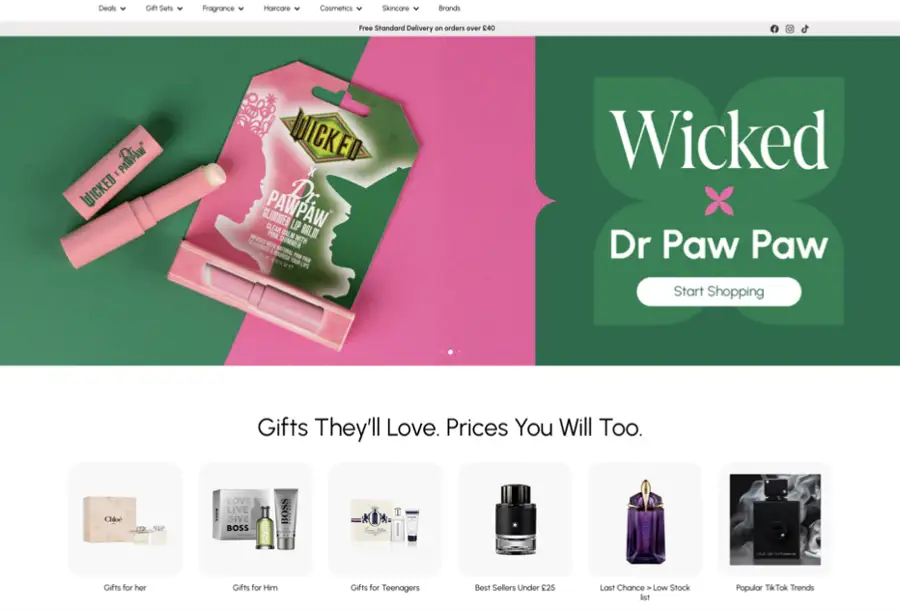
A large beauty wholesaler and manufacturer wanted to get control of their marketplaces and had identified their product systems as their core issue. They were looking for a PIM to replace their existing listing platform. A Business that could provide structure and automation for their 20,000 skus along with expertise and guidance with the design and set up their e-commerce operations.
The new Head of e-commerce was working within a limited budget and few internal resources and was looking for a way to turn around a failing e-commerce operation that included:
- 2 retail brands, both with their own marketplace accounts, websites and inventory.
- The seller had pre-existing campaigns on: Amazon, Brand Alley, Debenhams, Ebay, Matalan, Onbuy, SHEIN, Temu, Tiktok and 2 Shopify stores. But only Ebay, SHEIN and the websites were generating any notable revenue.
- A custom interface into Business Central (BC) from Microsoft as the only way to access their stock systems.
The Challenges
- A lack of internal resource and marketplace expertise.
- Poor and inconsistent product data quality.
- Multiple existing channels requiring urgent replacement.
- No Listabl integrations with Matalan, SHEIN or Tiktok.
The outcome
- Listabl provided managed services to initially clean, enrich and optimise the existing product data to create a marketplace-first Product data record ready to power all channels. New products are still created in Business Central and enriched in the Listabl system.
- The seller used the Listabl API to integrate Business Central to manage stock and orders in real-time.
- Listabl holds two sets of product data for each brand and is now feeding the two Shopify stores in addition to the marketplaces.
- SHEIN took a month to integrate and was ready for launch. We launched Ebay first, closely followed by SHEIN, Onbuy, Temu and the Shopify stores. The remaining channels are ready and simply awaiting the client's instruction.
- Listings are now controlled centrally for all channels from a single set of values.
For a small overloaded e-commerce team that was drowning under the weight of listings
Our Customers
If you sell repeatable items (where you have more than one of each SKU) then Listabl is for you.
Regardless of the systems you use, your experience with marketplaces or the size of your business, the Listabl platform makes listing on lots of channels realistic.
What size sellers use Listabl?
Listabl is used by:
- Growing brands expanding to their first marketplaces
- Established sellers managing thousands of SKUs
- Multi-channel teams running 5–10+ marketplaces
The common factor is the need to scale without adding headcount.
Book a call